
All my being is a dark verse
that repeats you to the dawn
of unfading flowering and growth.
I conjured you in my poem with a sigh
and grafted you to water, fire, and trees.
Perhaps life is a long avenue
a woman with a basket crosses every day;
perhaps life is a rope
with which a man hangs himself from a tree,
or is a child returning home from school.
Maybe life is the act of lighting a cigarette
in the listless pause between lovemaking,
or the vacant glance of a passerby who tips
his hat and says, Good morning!
with a meaningless smile.
Perhaps life is a choked moment where my gaze
annihilates itself inside in the pupils of your eyes—
I will mingle that sensation with my grasp
of the moon and comprehension of darkness.
In a room the size of loneliness,
my heart’s the size of love.
It contemplates its simple pretexts for happiness:
the beauty of the flowers’ wilting in a vase,
the sapling you planted in our garden,
and the canaries’ song—the size of a window.
Alas, this is my lot.
This is my lot.
My lot is a sky that can be shut out
by the mere hanging of a curtain.
My lot is descending a lonely staircase
to something rotting and falling apart in its exile.
My lot is a gloomy stroll in a grove of memories,
and dying from longing for a voice
that says: I love your hands.
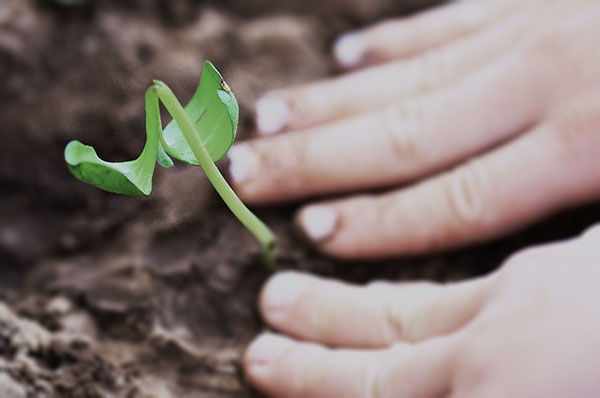
I plant my hands in the garden soil—
I will sprout,
I know, I know, I know.
And in the hollow of my ink-stained palms
swallows will make their nest.
I will adorn my ears with twin-cherry sprigs,
wear dahlia petals on my nails.
There is an alley where boys who once loved me still stand
with the same tousled hair, thin necks, and scrawny legs,
contemplating the innocent smiles of a young girl
swept away one night by the wind.
There is an alley my heart has stolen
from my childhood turf.
A body traveling along the line of time
impregnates time’s barren cord,
and returns from the mirror’s feast
intimate with its own image.
This is how one dies, and another remains.
No seeker will ever find pearls from a stream
that pours into a ditch.
I know a sad little fairy who lives in the sea
and plays the wooden flute of her heart tenderly,
tenderly . . .
A sad small fairy who dies at night with a kiss
and is reborn with a kiss at dawn.
Translation from the Farsi
By Sholeh Wolpé
“Reborn” is from Sin: Selected Poems of Forugh Farrokhzad (University of Arkansas Press, 2007).